Table of Contents
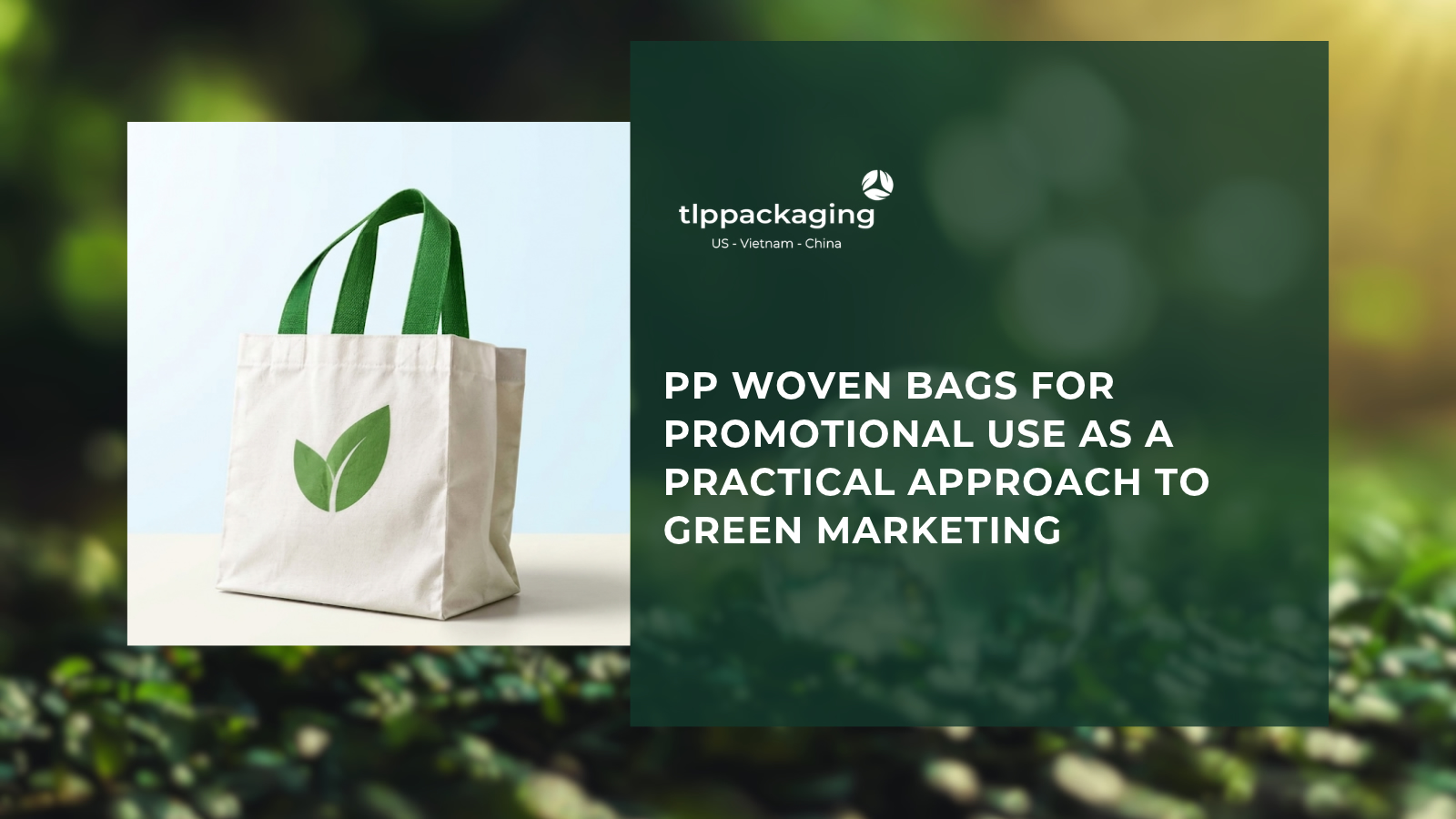
PP woven bags for promotional use can be more than a medium for displaying your brand. When designed around practical needs and intended for repeated use, they can also support a more thoughtful approach to green marketing.
In this guide, TLP Packaging will explore how you can apply green product principles to promotional bags, choose suitable configurations for different marketing activities and work with a manufacturer that understands your requirements.
Understanding PP woven bags for promotional use and their role in green marketing
PP woven bags are widely used in promotional activities thanks to their flexible customization options, including size, design and functionality. To understand how these bags can support a green marketing strategy, let’s first explore their key characteristics and common applications.
What are PP woven bags for promotional use?
PP woven bags for promotional use are branded carrying bags made from woven polypropylene (PP) fabric and distributed as part of marketing activities. You may use them at trade shows, exhibitions, product launches, retail campaigns, corporate events or customer appreciation programs.
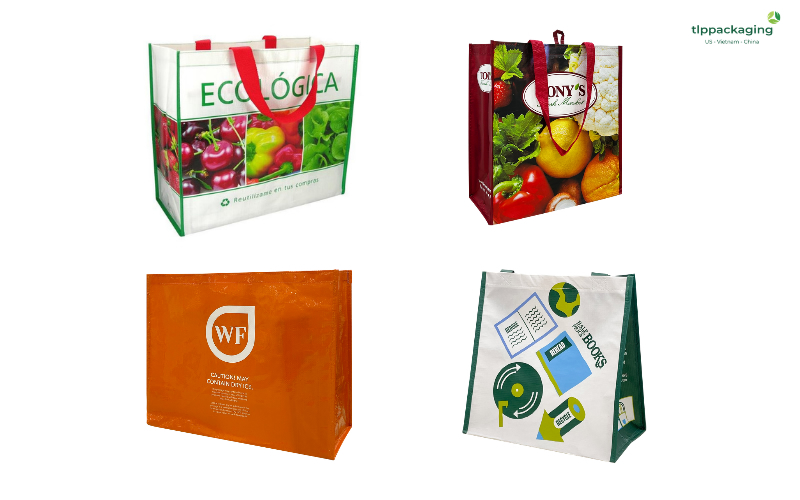
You can customize these bags to match your campaign objectives, including dimensions and capacity, handle configuration, printing, surface finishing (glossy or matte BOPP lamination), and additional features.
Green marketing starts with green products: Why is it becoming more challenging?
Green marketing involves more than promoting products with environmental messages. It connects the environmental characteristics of your products and business practices with how you price, distribute and communicate your offerings.
The product is a practical starting point because your environmental commitments need to be reflected in what you actually provide. A promotional bag, for instance, should offer useful functionality and a reasonable service life before you position it as part of a green marketing campaign.
However, putting this principle into practice is not always straightforward. There are three challenges below that deserve your attention.
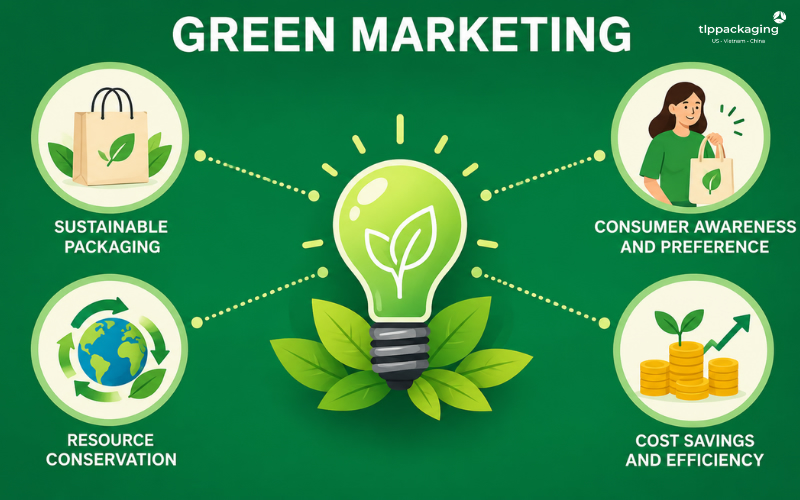
Understanding differences in consumers’ environmental expectations
Not every customer evaluates environmental responsibility in the same way. Some actively seek information about sustainable products, while others consider environmental impact only after evaluating price, quality and convenience.
- Gen Z isn’t the only green generation: Millennials may be even more environmentally conscious, partly because younger consumers have less purchasing power to consistently choose sustainable products.
- Older generations’ expectations matter too. Businesses should not overlook older consumers, who also expect brands to take greater responsibility for the environment.
- Consumers have different levels of environmental commitment: Even among highly environmentally conscious consumers, environmental impact does not always take priority over other purchasing considerations.
For brands, the challenge is to understand their customers’ different “shades of green” rather than assuming that everyone shares the same environmental priorities
Why price and convenience still influence green purchasing decisions
Environmental awareness does not automatically translate into purchasing behavior. Even when customers appreciate a brand’s environmental efforts, they still want products that are affordable, useful and convenient.
This reflects a broader green consumer paradox: consumers may support sustainability in principle but hesitate when greener options involve higher costs, reduced convenience or uncertain environmental benefits.
Greenwashing risks and the need for credible sustainability claims
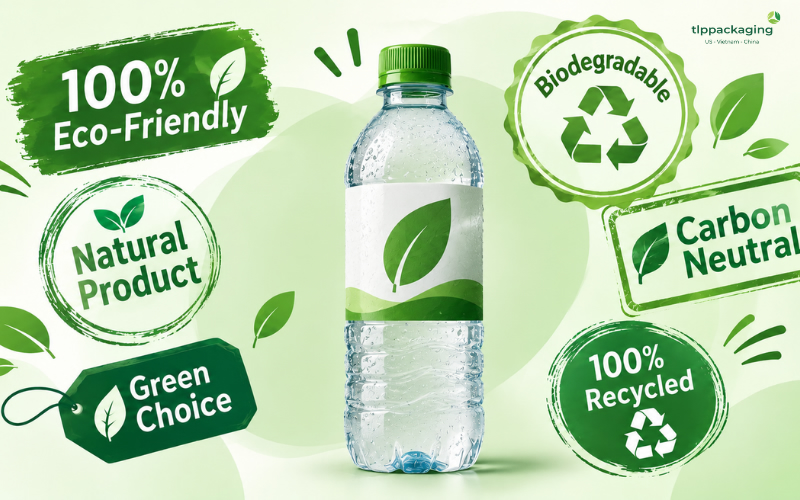
Greenwashing occurs when a company presents its products or practices as more environmentally responsible than the available evidence supports. Vague descriptions such as “100% eco-friendly,” “completely sustainable” or “zero environmental impact” can create credibility problems when they cannot be substantiated.
Greenwashing can have several consequences:
- Misleading consumers: Customers may make purchasing decisions based on inaccurate or unsubstantiated environmental claims.
- Eroding consumer trust: When people discover that a brand’s green claims are exaggerated or misleading, they may become skeptical of its environmental commitments.
- Weakening green marketing efforts: Repeated exposure to misleading claims can create greenwashing skepticism, making consumers less receptive to genuine sustainability messages from brands.
- Damaging brand reputation: A company’s credibility and reputation may suffer when its environmental claims are challenged or proven misleading.
As a result, greenwashing does more than misrepresent a product’s environmental value. It can also undermine consumer confidence in the brand and weaken the effectiveness of green marketing as a whole.
How can promotional products contribute to green marketing?
Promotional products provide a tangible way to connect your brand with customers. Unlike a digital advertisement that disappears from view after a few seconds, a useful carrying bag may remain in circulation and continue displaying your brand during everyday activities.
PP woven bags can support this approach when you consider their practical function from the beginning of the design process. Rather than treating the bag as a temporary advertising surface, develop it as a useful product that recipients have a reason to keep.
How can green product principles shape PP woven bags for promotional use?
Green Product is one of the four elements of the green marketing mix. It considers how materials, product functionality, durability and environmental impacts are addressed throughout a product’s lifecycle.
When applied to promotional products, these principles go beyond simply using materials described as environmentally friendly. They also involve designing products around actual needs, understanding their material composition and extending their useful life. PP woven bags offer several characteristics that align with these considerations.
Material efficiency and functional design
A key principle of Green Product is to use resources thoughtfully. Products should be designed to fulfil their intended functions without unnecessary materials or components. This means balancing material use with the practical requirements of each application.
PP woven bags support this principle through their flexible construction and customization capabilities. Their dimensions, fabric weight, gussets and handle configurations can be adapted to different promotional purposes. This flexibility allows the product’s construction to correspond more closely to its intended use. Rather than adding the same features to every bag, businesses can develop designs around the actual items recipients need to carry.
Material composition and environmental considerations
Green Product principles consider the materials used throughout a product’s lifecycle, including their impact on manufacturing, resource consumption and end-of-life management. Understanding material composition is therefore essential to evaluating a product’s environmental profile.
PP woven bags are made from polypropylene (PP), a thermoplastic polymer that can be melted and processed into flat tapes before being woven into fabric. This established manufacturing process provides a relatively clear material structure, allowing businesses to identify the main material used in their promotional bags. Compared with products made from less clearly specified material blends, this offers a more straightforward basis for communicating product composition and evaluating its environmental characteristics. PP also has established recycling pathways in many markets. As a recyclable thermoplastic, it offers the potential for material recovery after use.
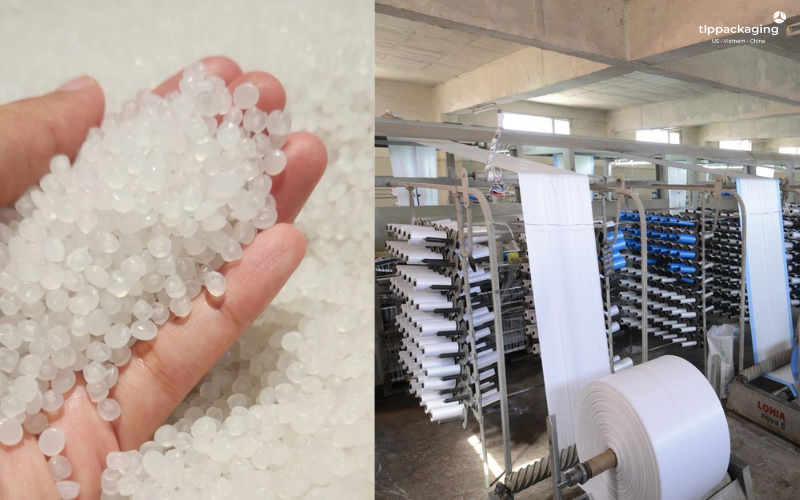
For promotional campaigns, these characteristics make PP woven bags a versatile option that combines identifiable material composition, customizable branding and potential end-of-life material recovery.
Designing PP woven bags for promotional use to encourage repeated use
Another important Green Product principle is extending a product’s useful life. Products that remain functional over a longer period have the potential to reduce the frequency of replacement, particularly when they are used repeatedly instead of being discarded after a single occasion.
PP woven fabric has an interlaced structure that provides strength for carrying applications. Depending on the fabric weight, stitching, handle construction and overall specifications, PP woven bags can be designed to accommodate different load requirements and everyday uses. Their structure also allows them to serve purposes beyond their original promotional function, such as carrying groceries, personal belongings or other shopping items.
For promotional campaigns, this creates an opportunity for the product to retain its usefulness after the initial event or distribution. When recipients continue using the bags in their daily activities, businesses can extend the product’s useful life while maintaining brand visibility beyond the original campaign.
How can businesses use PP woven bags for promotional use in different marketing activities?
The right promotional bag depends on its distribution context and intended use. A bag for carrying exhibition materials requires different specifications from one designed for corporate gifts or retail shopping.
PP woven bags for promotional use at trade shows and exhibitions
At trade shows and exhibitions, visitors often need to carry brochures, catalogs and product samples between booths. A suitable promotional bag should therefore offer sufficient capacity, comfortable handles and visible branding.
A 30H × 10G × 38W cm bag, for instance, can accommodate A4 documents and several small samples. If the contents are heavier, reinforced handles and stitching should be considered, with the finished bag’s load capacity verified through testing.
PP woven bags for product launches and corporate giveaways
Product launches and corporate giveaways call for bags that complement the presentation of the items inside. Appropriate sizing, a structured shape and a finish consistent with your brand identity are key considerations.
A bag with a wider bottom gusset, for example, can hold a boxed product, notebook and brochures. You can opt for matte BOPP to create a more understated appearance or glossy BOPP for a brighter visual effect.
PP woven bags for retail promotions and shopping campaigns
In retail promotions, a bag’s value lies in its usefulness beyond the initial purchase. Everyday functionality, durability and perceived value should guide the selection, ensuring the bag suits customers’ shopping habits and expected carrying needs.
A 35H × 12G × 40W cm bag can serve as a starting configuration for carrying multiple retail items. A wider gusset creates extra room for boxed products, while suitable fabric weight and reinforced handles help support the expected load.
What other factors matter when sourcing PP woven bags for promotional use?
Green Product provides a foundation, but a credible green marketing strategy also considers price, distribution and promotion. These elements influence how your product is sourced, delivered and presented to customers.
Green price – balancing environmental value and affordability
A promotional bag needs to fit your campaign budget while delivering the functionality and quality you expect. Two bags with similar appearances may have different material and production requirements.
You can also evaluate the cost in relation to expected use. For example, if a bag costs $2 and is used 20 times, its simple purchase cost is $0.10 per use. This is an illustrative calculation, not a measure of environmental impact, but it helps you understand why durability and repeated use matter when assessing product value.
If you want to position your promotional bag as a higher-value option, explain the features that justify its price. Avoid relying on environmental language alone to support a premium.
Green place – considering supply chains and distribution
Green Place considers how products move through the supply chain, from material sourcing and manufacturing to transportation and delivery.
For your promotional bag order, this means looking beyond the factory’s production price. You should also consider:
- Where the manufacturing facility is located.
- How materials and finished products are transported.
- Whether production schedules can be coordinated with your campaign dates.
- How packaging and shipment quantities are planned.
- Whether your supplier can provide relevant information about material sourcing and production.
Ask your supplier about production planning and delivery options early, especially if your campaign has a fixed launch date or requires distribution across multiple locations.
Green promotion – communicating environmental efforts honestly
Green Promotion is about explaining your environmental efforts clearly and accurately. Your message should reflect the actual product specifications and practices behind the campaign.
For example, instead of describing every PP woven bag as “100% eco-friendly,” you could communicate specific, verifiable information:
- The bag is made from woven polypropylene fabric.
- Its dimensions and construction are designed for a stated promotional application.
- It includes a particular material or recycled-content specification, where supported by supplier documentation.
- It is designed for repeated use, with practical features that support everyday carrying.
You can also encourage recipients to reuse the bag through campaign messages or simple care instructions. A QR code linking to product information may help customers understand the materials and intended use.
The key is consistency. Your advertising, product specifications and supplier documentation should support the same claims. If a benefit cannot be verified, do not present it as an established environmental result.
Custom PP woven bags for promotional use from TLP Packaging
Your promotional bag should do more than display a logo. It should carry the right products, fit your campaign objectives and provide a useful experience for recipients.
TLP Packaging works with dedicated manufacturing facilities, including WEPAC Joint Stock Company in Dong Tu Industrial Cluster, Hung Yen Province, Vietnam, to coordinate custom PP woven bag production for business buyers.
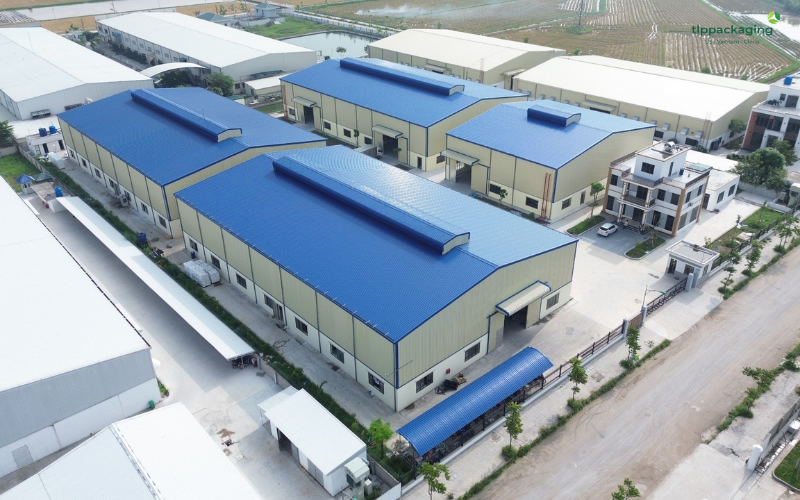
You can discuss a range of specifications for your project, including:
- Custom dimensions and gussets: Adjust bag height, width and side or bottom gussets to accommodate your products, event materials or gift sets.
- Printing and surface finishes: Choose branded printing and BOPP lamination, with glossy or matte finishes to match your desired presentation.
- Handle configurations: Select hand-held handles or longer webbing straps for shoulder carrying.
- Functional additions: Consider zippers, Velcro strips and press-stud fasteners when your application requires additional closure options.
- Bulk production planning: Coordinate order specifications and shipping requirements with an MOQ starting at 5,000 pieces.
- Quality inspections: Arrange product inspections based on agreed requirements, including AQL 2.5 acceptance criteria for checks such as stitching integrity, handle strength, print quality and overall consistency.
If you are developing a promotional campaign, share your intended bag dimensions, contents, design requirements, order quantity and target delivery date. This gives your manufacturing partner a clearer basis for recommending a suitable configuration.
Start Your Green Promotional Campaign with Custom PP Woven Bags
PP woven bags for promotional use can support green marketing through practical functionality, appropriate material selection, durability and transparent communication. The right bag is one that fits your campaign, meets recipients’ needs and encourages repeated use.
TLP Packaging offers customized PP woven bags for trade shows, retail promotions, product launches and corporate gifting. Contact our team to discuss your requirements and find a suitable solution for your brand.